
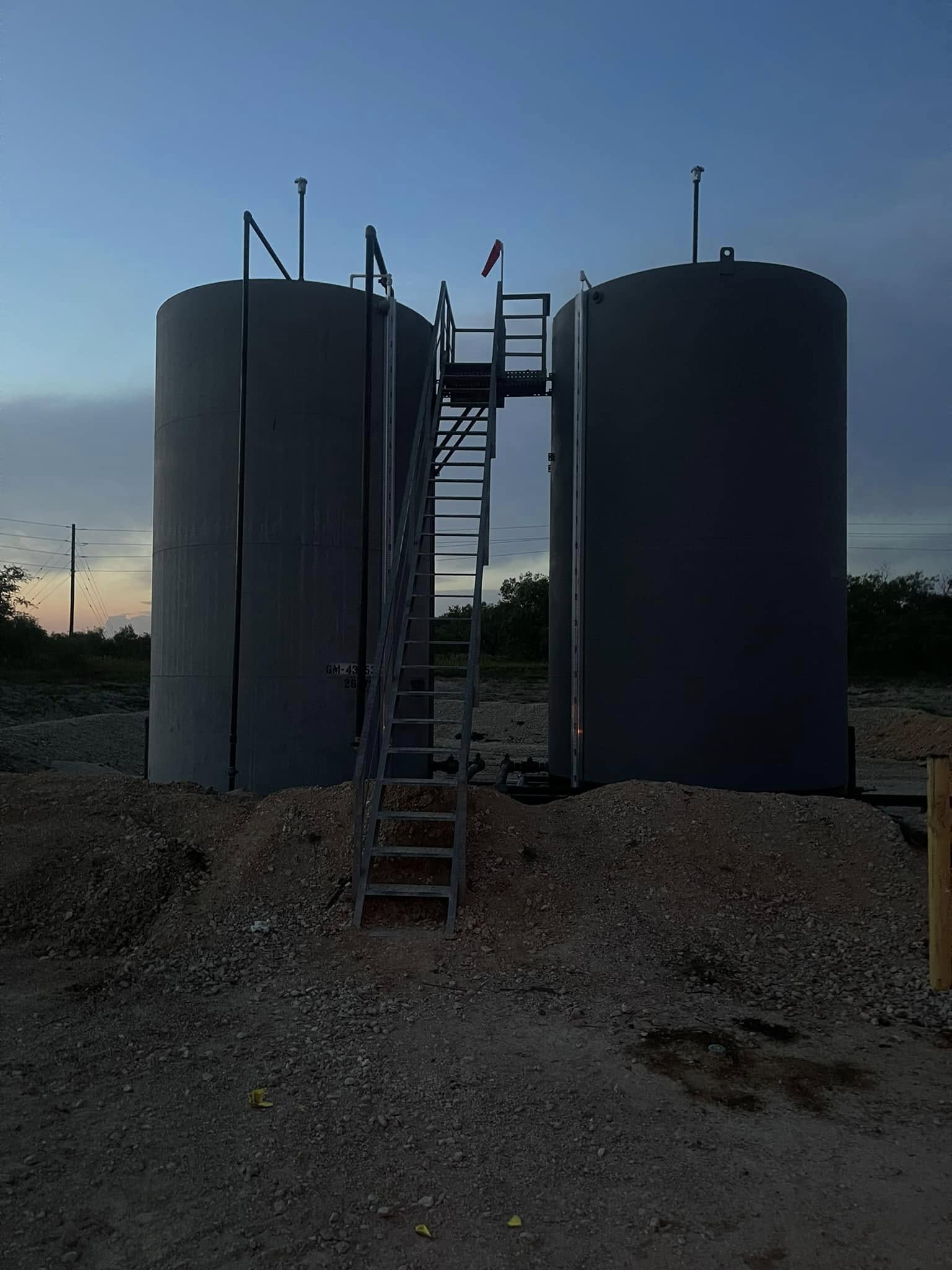
Every pumper knows the feeling of climbing a 20-foot ladder in a freezing rainstorm or high-velocity Oklahoma wind just to crack a thief hatch and drop a tape. Beyond the physical fatigue, opening that hatch releases a cloud of volatile organic compounds (VOCs) and potentially lethal H2S gas directly into your breathing zone. Whether you are managing a battery of new fiberglass saltwater tanks or older steel crude units, the method you use to monitor levels impacts your daily safety, your environmental compliance, and the accuracy of your run tickets. Selecting the right gauge depends entirely on understanding how these two tank materials behave under pressure and how they react to the fluids they hold.
Material Realities: Why Fiberglass and Steel Require Different Approaches
Steel has been the industry standard for production tanks for decades, primarily due to its structural integrity and its ability to handle heated crude. However, steel is inherently susceptible to internal corrosion from produced water and external rust from the elements. In a steel tank environment, gauging equipment must be rugged enough to withstand the abrasive nature of crude oil and the chemical treatments used to break emulsions. Traditional internal floats in steel tanks often face "waxing" issues, where paraffin buildup on the cables or the float itself causes the gauge to stick, leading to false readings and potential overflows.
Fiberglass-reinforced plastic (FRP) tanks have become the go-to choice for saltwater disposal (SWD) sites and corrosive chemical storage. They are immune to the electrochemical corrosion that eats through steel bottoms, but they present a different set of challenges for gauging. You cannot simply weld a bracket onto a fiberglass tank. Any modification to the tank wall must be handled with precision to avoid compromising the structural layers of the resin and glass. Furthermore, fiberglass tanks tend to "breathe" or expand and contract more noticeably than steel under temperature swings, which can throw off the calibration of rigid internal gauging systems.
When choosing a gauge for these materials, lease operators must consider the following factors:
- Mounting Requirements: Steel allows for welded clips and brackets, while fiberglass requires specialized gaskets, backing plates, or strap-on mounting systems.
- Chemical Compatibility: The internal components of the gauge must be rated for the high salinity of produced water in fiberglass tanks or the corrosive sulfur compounds often found in crude stored in steel.
- Thermal Expansion: Gauges must remain accurate even as the tank shell expands in the summer heat and contracts during winter cold snaps.
The Traditional Gauging Toolkit: Pros and Cons in the Field
Manual gauging with a tape and bob remains the baseline for the industry, but it is increasingly viewed as a liability. Every time a pumper opens a hatch on a steel tank to "stick" it, they are exposing the oil to oxygen, which can accelerate the corrosion of the tank's interior deck. In fiberglass tanks, the issue is often the H2S concentration in the vapor space; even a small amount of gas escaping the hatch can create a hazardous environment on the catwalk. While manual gauging is accurate for "spot checks," it provides zero real-time data and carries the highest risk of human error and injury.
Internal float-and-board systems are a step up from manual gauging, providing a visual indicator on the outside of the tank. These systems use an internal float connected by a cable or rod to a pointer on a measurement board. While they are simple to understand, they are notorious for mechanical failure. In steel tanks, paraffin buildup on the cable often causes the pointer to freeze in place. In fiberglass tanks used for saltwater, salt crystals can crust over the pulleys and cables, rendering the system useless until a pumper climbs the tank to manually free the mechanism.
Electronic tank levels, such as guided wave radar or ultrasonic sensors, offer high precision and can tie into SCADA systems for remote monitoring. However, these systems are expensive to install and maintain. They are also highly sensitive to foam on the surface of the liquid—a common occurrence in flowback operations—and can be "blinded" by heavy vapors. In the lightning-prone environment of the Southern Plains, electronic sensors are frequently fried by surges, leaving the pumper blind until a specialized technician can be sent out for repairs.
Mounting and Structural Integrity Challenges
One of the most significant differences between gauging fiberglass and steel tanks is how the hardware is physically attached. For steel tanks, the process is straightforward: a welder can attach the necessary clips for a gauge housing directly to the tank shell. However, this creates a "hot work" requirement, which often means the tank must be emptied and steamed out to ensure it is gas-free before any work can begin. This downtime represents a significant loss of production and increased labor costs for the operator.
Fiberglass tanks do not allow for welding, meaning any through-wall gauge installation must be planned at the factory or involve careful field drilling. Drilling into a fiberglass tank carries the risk of "star crazing" or delamination if not done correctly, which can lead to leaks over time. Many operators prefer "no-drill" solutions for fiberglass, utilizing external gauges that can be secured with heavy-duty straps or mounted to existing manways and flanges. This preserves the integrity of the tank's chemical barrier and prevents the leaks that often plague retrofitted fiberglass units.
Consider these structural best practices when selecting your gauging hardware:
- Load Distribution: For fiberglass, ensure the gauge mounting system distributes weight across a larger surface area to prevent stress cracks in the resin.
- Sealing Compounds: Use UV-resistant sealants for any penetrations on fiberglass tanks to prevent the sun from degrading the attachment points.
- Corrosion Barriers: On steel tanks, ensure that any gauge hardware is made of galvanized or stainless steel to prevent "galvanic corrosion" where the gauge meets the tank wall.
Safety, Environmental Compliance, and VOC Mitigation
The EPA and state regulatory bodies are increasingly cracking down on "tank breathing" and methane emissions. Traditional gauging methods that require opening the thief hatch are becoming a compliance nightmare. In many jurisdictions, any time a hatch is opened, it must be logged, and excessive venting can lead to heavy fines. This is where external gauging systems provide their greatest value. By providing a clear, accurate reading of the fluid level without ever breaking the seal of the tank, external gauges allow the operator to keep the system closed and the vapors contained.
In steel crude tanks, maintaining a slight pressure is often necessary to keep the light ends of the oil from evaporating, which preserves the gravity and value of the product. An external gauge allows the pumper to verify levels while the tank remains under pressure. In fiberglass saltwater tanks, the goal is usually to prevent the escape of H2S. An external gauge ensures that the pumper stays on the ground, away from the "danger zone" of the catwalk, and keeps the hazardous gas locked inside the tank and the vapor recovery unit (VRU) system.
"The safest climb is the one you never have to make. Every time we can move a pumper's task from the catwalk to the ground, we've significantly reduced the LTA risk for that lease."
Furthermore, external gauges are not affected by the internal environment of the tank. Whether the fluid is foaming, steaming, or coated in a thick layer of paraffin, the external indicator remains clear and functional. This reliability is essential for haulers who need to know exactly how much room they have left in a tank before they start their pump, preventing overfills and the resulting environmental remediation costs.
Practical Takeaways for Reliable Tank Monitoring
When evaluating your options between fiberglass and steel production tanks, the goal is to find a gauging solution that is as durable as the tank itself. Steel tanks need a gauge that can handle the weight of crude and the potential for wax buildup, while fiberglass tanks need a system that respects the material's structural limitations and chemical resistance. In both cases, the trend is moving away from internal mechanical systems and toward external indicators that offer better safety and lower maintenance requirements.
Troglin Tank Gauge Services, LLC specializes in solving these specific field problems with our patented external tank gauges. Our systems are designed to be installed on both steel and fiberglass tanks, providing a clear, ground-level reading that eliminates the need for daily tank climbs. For steel tanks, our gauges offer a rugged alternative to "stuck" internal floats. For fiberglass tanks, our mounting solutions ensure the integrity of your tank is never compromised, providing a leak-free, high-visibility monitoring system.
By implementing Troglin's external gauges, you are investing in:
- Personnel Safety: Keep your pumpers and haulers on the ground and away from VOC/H2S exposure.
- Environmental Protection: Maintain a closed-loop system by eliminating the need to open thief hatches for routine gauging.
- Operational Efficiency: Get accurate readings in seconds, regardless of weather conditions or fluid characteristics.
- Reduced Maintenance: Our external design means no internal cables to snap, no floats to sink, and no pulleys to seize up.
Whether you are outfitting a brand-new battery in the STACK or Permian, or retrofitting older tanks in a legacy field, the right gauge makes the difference between a high-maintenance headache and a smooth, safe operation. Choose the system that was designed by people who understand the dirt, the wind, and the reality of the oilfield.